Also been thinking about this a bit more and I might try to incorporate an atheistic society with more technological advancements than the other cultures, though it might be more akin to late 1800s-early 1900s tech for the most part.
People talking abt my worldbuilding without my own input  ts is so magnificent
Another question for the world, did the gods come into existence on their own/with the formation of the universe or are they manifested by the strength of the believers and number of worshippers. Also sorry if you’ve already answered it
It’s a little bit of both. The main religions that are worshipped currently in universe all manifested on their own very long ago, and they used to be more open towards each other.
After this, only a few have managed to form into existence by the worship of humans, and a good bit of those were mostly offshoots from previous religions in the first place. For worship to manifest a new religion, people would basically have to give up a bit of their magic to manifest a new deity.
Some people in lore (which I’ll eventually get to and name at some point) have even tried manifesting themselves into gods through this, but they haven’t become such yet.
It’s theoretically possible to do, but doing so would first require someone to already be notable enough, which 99% of the time will require having been part of a religion at first. Then you have to get people interested in your message and believe in your power, and then having to deal with whatever amount of opposition comes your way from you basically trying to declare yourself a god. I.e., basically every other religion.
1 Like
Enough yap about that though I feel like engagement baiting a bit
i realized most of this relic talk doesn’t really help without a general idea of what each religion is about. Unfortunately, I am lazy and haven’t worked on all of the concepts for them yet.
However, I would still like to at least get the ideas out there for people to guess on. Thus, I ask whatever people may see this reply
Should I present the basic ideas for a few of the religions with my riddles three? I’m not the best at making guessing games but I still would like to present them in this way (for engagement purposes).
So, would any of you play?
- I would play your riddles three.
0
voters
Maybe
Perchance
is it gonna be like “remember the time you ganked someone in AO? You have a bomb inside your head” type riddles
No i was planning on using some song quotes and/or zoomed in images
Updated
Added some more stuff to phase 2 and 3, added phase 3 to the original topic. Phase 4 and the theoretical phase 5 are now up as well.
Added another part for relics describing what happens when they are disarmed. This part also teases a bit of the first religion I’m working on.
Dropdown for a read will be here
New stuff added
From the end of this phase forward, the relic user will no longer be able to revert their magic back into neutral magic, effectively locking them from being a Priestsmith or Enchanter unless they are to disarm their relic (see Disarming Relics for more information).
Phase 3: “Dedication”
When a relic user has finished their training under the aspect they chose, they might choose to further improve their capabilities through their dedication and fate, hoping to become worthy or notable in the eyes of the deity they worship. While their training would become more personal at this point, there are some outlines as to what they may want to do for this training. Most religions may have relic users travel to certain locations related to their deity, usually religious temples or controlled wilderness areas believed to belong to them.
From this point, relic users will show their worship, to which they may receive some form of message from their deity delivering them a quest to embark on. This message might come in the form of natural signs, premonitions, visions, or even what may be seen as coincidences at the time. If their deity ends up giving no message, something which has been believed to be happening more often, then it will be up to the relic users to create their own quest to train on. This quest may take years to fully complete, potentially longer if there was no clear message given to the relic user, but eventually, their efforts will be recognized.
At the end of this training, there tends to be a test/vision of sorts that the user goes through. It’s not widely understood what happens in this step, but most relic users report having a one-on-one with their deity. Whether this “one-on-one” refers to a conversation or spar is debatable, most people tend to believe in the former, as even most warrior related cultures believe the latter to be absurd.
Regardless, what happens ends up feeling like a dream to the user, one which (usually) leaves them with their training fully finalized. Once this is successfully reached, the user will find themselves with further mastery over their own magic, allowing them the opportunity to create their own spells and adjust previously learned spells. It is at this point that they also find themself recognized as powerful individuals in their religion, usually becoming high ranking generals in their militaries or the heads of various institutions.
If this last step is to fail in whatever scenario happens, then the user will find themself back at square one of this phase, their quest failed and training vanished. Fortunately, this rarely occurs in this phase, although it isn’t understood why this might happen in the first place due to the unknown nature of this step.
Phase 4: “Immortalization”
If a person chooses to further improve their magical capabilities, then they would be beginning the immortalization phase of specialization. Unlike the other phases, this phase doesn’t have any clear track in which changes take place. This phase more so describes how a relic user may immortalize themself as a figure in their religion.
In this phase, a dedicated relic user learns to master their magic to the point of being able to change it in any which way; however, getting to this point is very difficult, and some magical changes may take a long time to take hold depending on how different it is to their magic’s element. For example, trying to change from a fire-based magic to a water-based magic may take decades or centuries, if not impossible in a human lifetime.
If a relic user is successful in changing their magic like this, then they may be able to help teach others their new magic as an aspect, which eventually may become passed down for generations, with the relic user being immortalized as an important part of their religion. This, however, is a lot more difficult to do in polytheistic religions as a regular relic user due to their powers deriving from specific deities or demigods.
Phase 5: “Ascension” (Purely Theoretical)
While the exact ending of this phase isn’t known, it is believed that another phase after this is possible. In theory, this phase would be where the relic user could potentially become a god, separating themself from their humanity entirely and creating a new religion.
This phase, however, has not been proven to exist, nor will it likely be proven for a long time. For one, this would require people to begin devoting themselves fully to you rather than their own religion, giving up some of their magic to improve your own powers. Because of this, many religions view this action as treachery, one which would immediately be punished.
At best, they may be exiled alongside their followers for their actions. At worst, they might be hunted due to them trying to make others undermine their own religion. Some may even be wiped from any public records if what they were doing was truly terrible in the eyes of their religion.
Thus, this phase remains unproven as of now, although a few instances of people trying to find it do exist in the present day. The most notable of these would be Lustraline the Celestial due to her pacifistic beliefs and her agreeability allowing her to hold communications with high officials in other cultures, even those of her old religion. Regardless, only time will tell whether this phase does truly exist.
Disarming Relics
If one chooses to leave their religion, for any reasons deemed necessary by the person, they will end up having to disarm their current relic to do so. The process itself is not that difficult to do, as it only takes completely destroying one’s relic with their own magic. The true issue, however, arises afterwards from the loss of the magical capabilities. In the early developments of relic magic, the magical energy becomes tied to the user’s inherent bodily functions, and the forcible removal of it from one’s body can have vastly different effects based on how far they have specialized.
At the least consequential phase of this, the Formation phase (and any point beforehand), the user will only end up having lost their magical training and undergoing Drain Sickness (a phrase used to describe the loss of energy from their magical energy being removed) for a short amount of time, typically only going up to a week at most.
If the user disarms their relic during the Aspection phase, then they will find themself having lost their physical training alongside any magical training, as well as undergoing Drain Sickness for upwards of three months. Alongside this, they will find themself undergoing a complete personality reversal if they were to undergo any changes during this phase.
If the user disarms during the Dedication phase of specialization, then not only will they find themselves undergoing other aforementioned issues (loss of all training, extended periods of Drain Sickness, personality reversal, etc.), but they will also find themselves having undergone Retrograde Amnesia, with any memories of their journey becoming unavailable. While in some cases these memories eventually end up returning, more often than not the user will never regain them, either due to them not wanting to or their brains physically preventing them from doing so. In the worst cases of this recorded, some users end up having completely lost any and all memories they once had, being left completely as a blank slate.
Unfortunately, there isn’t much known about the effects of disarming during the Immortalization phase (and subsequently the Ascension phase), as most users in these phases of specialization have become fully loyal to their religion. Out of all of the modern day religions, there has only ever been one recorded incident of this happening. In this incident, known colloquially as the Misfortune of Saint Tabitha, the disarming relic user had caused a violent explosion of magic energy to burst from her amulet as it shattered, causing the cathedral the incident took place in to begin collapsing. After the residents inside the collapsing cathedral escaped, including the unconscious Saint Tabitha, it was found that she was stuck in a deep coma, the loss of her magical energy having been too much for her body to handle.
While Saint Tabitha was transported to the highest medical circuit in her religion for further studying, followers of her teaching reported their aspection completely reverting back to the formation phase. Strangely, no loss in magical training was ever reported by them, and later medical checkups showed no cases of Drain Sickness or physical damage to the followers. The only common occurrence between all of them, outside of their lost aspect, was supposed nightmares and hallucinations of their previous saint, which was chalked up to being trauma due to the event by the doctors.
Further information about the incident and the state of Tabitha has been withheld from the general public, and likely will continue to be for the foreseeable future until, in the words of the medical circuit, “Saint Tabitha can live again.”
1 Like
It’s been almost two weeks and I got distracted by school work. I might as well show what I got for the first religion so far though.
Divollism (PLACEHOLDER(?) NAME)
Explanations about this religion would go here
Monotheistic - This religion follows one deity only, even though their magics can differ through the saints that follow this deity.
Neutral Magic: Light Energy - The main magic used by this religion is a light-based energy, typically colored a bright yellow at first.
Formation Types
Blade Formation - Those who wish to take up the job of warriors and guards are taught the Blade Formation, which begins with training one of Divollism’s foundational spells: weapon manifestation.
Cleric Formation: - Those who wish to take up the job of healers and priests are taught the Cleric Formation, of which are taught healing and shielding spells as their first types of support.
Sage Formation - Those who wish to be combatants without wanting to take up weaponry would be taught the Sage Formation, which would result in them learning summoning based spells for self preservation and as ways to attack. This formation is a newer development in the multicultural zones where Divollism is present, although it hasn’t been recognized by other primarily Divollist areas. Still, it’s significant enough to warrant putting it separate from the Cleric Formation.
1 Like
Any feedback or questions would be appreciated if possible!
neat
Updated the information regarding the misfortune of Saint Tabitha because I thought up something cooler
New reading of the event in which Saint Tabitha accidentally caused crystal energy organs/crystal cancer to exist. Flip a coin on which one you want it to be, I don’t know yet which one it should be.
In this incident, known colloquially as the Misfortune of Saint Tabitha, the disarming relic user had caused a violent explosion of magic energy to burst from her amulet as it shattered, causing the cathedral the incident took place in to begin collapsing as crystal growths started appearing sporadically. After the residents inside the collapsing cathedral escaped, including the unconscious Saint Tabitha, it was found that she was stuck in a deep coma, the loss of her magical energy having been too much for her body to handle.
At the same time, the magic energy that had left her body had begun to seep into the ground, with a projected area of about 25,768 km² total. The very edges of this area had the least changes, as the plants turned a deep teal color and took on a more rigid, crystal-like appearance. Closer to the center, however, more significant changes occurred. Buildings became enveloped by crystal growths growing on them, many collapsing from the inside as larger ones broke through their structure. Plants began to become as hard as rocks while changing into a variety of colors, from vibrant, rosey reds to intensely deep violets, and anything in between. Even the animals within the area had begun to develop crystals on their bodies, their teeth and claws changing entirely into jewels.
While Saint Tabitha was transported to the highest medical circuit in her religion for further studying, followers of her teaching reported their aspection completely reverting back to the formation phase. Strangely, no loss in magical training was ever reported by them, and later medical checkups showed no cases of Drain Sickness or physical damage to the followers. The only common occurrence between all of them, outside of their lost aspect, was supposed nightmares and hallucinations of their previous saint, which was chalked up to being trauma due to the event by doctors.
Further information about the incident and the state of Tabitha has been withheld from the general public, and likely will continue to be for the foreseeable future until, in the words of the medical circuit, “Saint Tabitha can live again.”
About 30 years later, present day, the 3rd medical circuit went back to perform a health check on the towns within the area that Saint Tabitha’s magical energy had dispersed. When they recorded that an old man, who lived a rather far distance from the center of the magical explosion, had begun developing crystal growths along his body, there was a massive panic amongst people in the crystalline plains. Not long after, the Grand Church ordered the movement of townspeople within the affected area into a quarantined zone outside of it. There, they had the medical circuit perform operations to determine the effects the magical energy had on the human body and if it might be fatal. This happened three months ago. Results so far have not been published, and the operation is still ongoing as of writing.
1 Like
Oh wow, I’m finally updating this after forever!
Imma be so fr 99% of my worldbuilding for the past month has been making word art for aspects that showcase the element/magic effectively.
Anyways, here’s what I’m sharing for now:
Divollism basics, bladed formation aspects and the crossblade tournament event
Divollism Basics + Bladed Formation Aspects
Divollism
Divollism is one of the oldest and largest religions in the world, with a significant number of religions having started as offshoots of Divollism at some point. No one Divollist culture is the same in belief, especially when it comes to formations and aspects recognized by them. The only similarity between all of them is that they all, to some extent, answer to their main form of government, known as the Grand Church.
The Grand Church oversees the creation of state armies, educational institutions, churches, and cleric outposts in which the Medical Circuits, or their highly praised healthcare and medical division, can enact within. It also oversees foreign relations with other cultures and religions, mainly pertaining to war and trade, although any laws about how other religions are treated is mainly up to individual states.
Monotheistic - This religion follows one deity only, named Divalia, a deity that takes on many different forms and interpretations. They believe that this deity had made the first humans by shining their light upon the earth, growing them from flowering plants that ceased to exist after the creation of humanity. It is also believed that Divalia gifted magic to their first followers, known as the Saints of Battle, who ended up specializing the energy into multiple forms, even to farther off forms such as metal.
Neutral Magic: Light Energy - The main magic used by this religion is a light-based energy, typically colored a bright, light yellow at first.
Capitol - Valenor, Ascentia.
Currency: Cadals - shiny gold coins decorated with sword patterns on the sides. Printed coins will have the heads side feature certain saints while the tails side will feature their aspect.
Formation Types
Blade Formation - Those who wish to take up the job of warriors and guards are taught the Blade Formation, which begins with training one of Divollism’s foundational spells: weapon manifestation. This fundamental skill of their culture has rendered weaponsmithing for armies to be phased out in many of their cultures, instead being saved only for decorative purposes.
Cleric Formation: - Those who wish to take up the job of healers and priests are taught the Cleric Formation, of which are taught healing and shielding spells as their first types of support. Divollist cultures tend to treat those who take up this formation with high regard, and many in this formation go on to become members of a Medical Circuit later on in life.
Sage Formation - Those who wish to be combatants without wanting to take up weaponry would be taught the Sage Formation, which would result in them learning summoning based spells for self preservation and as ways to attack. This formation is a newer development in multicultural zones where Divollism is present, although it hasn’t been recognized by other primarily Divollist areas. Still, it’s significant enough to warrant putting it separate from the Cleric Formation.
Aspect Types
The aspection process of Divollism is mainly done through the following of saints, cardinals, and other prominent figures in their religion’s past or present. During aspection, many relic users will find themselves having to learn new styles entirely due to their magic, such as bladed formation users learning specific weaponry that pertains to their new magic.
Bladed Formation

Aspect Founder - Battle Saint: Veila the Twin Battle Saint
Solivahnt is one of the oldest aspects in Divollism, first used by Veila, one of the twin battle saints, after she wanted a way to focus Divalia’s light to pierce the armor of enemies. This aspect utilizes focused sunlight in order to create fast and precise strikes that weaken the enemy.
The training for this aspect is initiated through a special trial, in which trainees are put into a dark combat room with a focused beam of light in the middle. The trainees are then told to focus their blade’s light underneath the concentrated beam of light, before they attempt to hit the trainer in the dark. If they successfully manage to land three hits on them, then the trail is passed.
The main blade used by this formation is the rapier for its piercing capabilities, but some may adapt their magic later on to use other piercing based weapons.

Aspect Founder - Battle Saint: Supreme Judge Rolivand
Ardánta is one of the oldest aspects in Divollism, first used by Supreme Judge and battle saint Roviland when he wanted a magic better suited for punishment and guidance under his beliefs of justice. This aspect utilizes fiery energy to overpower and burn the enemy, as well as leaving walls of fire to deter enemies.
The training for this aspect starts after an aptly titled “Trial by fire”, in which trainees fight each other in a ring of fire. These trails are publicly available to watch, in hopes to add further intensity to the matches. Those who manage to win are able to move on with training, while those who lose can continue to try again as many times as they want.
The main blade used by this aspect is the saber for its slashing capabilities allowing for more lethal burns, but some may adapt their magic later on to use other bladed forms.

Aspect Founder - Battle Saint: Crozin the Nomad
Galenĩa is one of the oldest aspects in Divollism, first used by Crozin the Nomad when he was looking for a magic that can increase the speed of himself and his companions while pushing back foes who blocked them in their travels. This aspect utilizes swift and powerful winds to enhance the user’s mobility and to disorient foes.
The training for this aspect starts with trainees learning to keep their balance against fast winds made by their trainer as they traverse through the area. This then goes from keeping their balance, to being able to run against the wind, to being able to fight in them. If trainees get to the point that they can fight well in high winds, then they continue on further with aspect training.
This aspect is known mainly for utilizing dual wielded daggers for their swifter handling, but some may adapt their magic later on to utilize other dual bladed weapons.

Aspect Founder - Battle Saint: Fractrius the Gladiator
Metactullum is one of the oldest aspects in Divollism, first used by Fractrius the Gladiator when he wished to turn the weapons and armor of his foes against themselves. This aspect uses slow, heavy metal magic capable of shattering enemy weapons, before fusing the fragments to the blade to make it more powerful.
The training for this aspect starts with relic users learning how to break various metal objects using their blade, cutting down on the amount of hits needed every time. Users train until they can shatter a blade in one slash during a combat test, at which point they move on further into training.
This aspect is known mainly for utilizing greatswords for more powerful swings, but some may adapt their magic later on to utilize other heavy bladed weapons.

Aspect Founder - King Whirrell of Canyirol
Sanbirene is one of the younger aspects in Divollism, first used by King Whirrell when he was leading his army in the Battle of Canyirol when he needed a way to conceal his army in the midst of the barren desert. This aspect uses sand to make the user harder to hit by both cloaking themselves and by blinding the enemy.
The training for this aspect starts with relic users training to cloak themself in a sandstorm using sand around them, before taking a test to land a hit on another trainee within the sandstorm. If there is no place with any sand present, such as a nearby desert or beach, then there will be an aptly named “Sand Room” erected for this training to take place in. Users capable of remaining unseen during the combat test will move on in aspect training.
This aspect is known mainly for utilizing the scimitar for better magic transfer for the sand, but some may adapt their magic later on to utilize other curved bladed weapons.

Aspect Founder - The Samurai of the Flood
Flumamnis is one of the youngest aspects in Divollism, first used by “The Samurai of the Flood”, a figure who was believed to have aided the Divollists in their journey through the Pointtail Jungle by guiding their boats with the river currents. While their existence is debated heavily, the fact remains that an impression has been left upon Divollism by the existence of Flumamnis. This aspect uses fast flowing water akin to that of rivers to overwhelm the enemy with its high speed and intense magic control.
The training for this aspect starts with the user training in high velocity streams of water, both fighting with and against the flow of the water. Users train until they can successfully fight both while fighting against the current and while using the water to their advantage, before moving on in training.
This aspect is known mainly for utilizing katanas for its mobility and swift magic flow, but some may adapt their magic later on to utilize other mobile bladed weapons.
Crossblade Tournament
Events
The Crossblade Tournament - Every decade, primarily Divollist cultural areas will host the Crossblade Tournament. This multi-month long tradition was started many centuries ago by the Grand Church in order to determine the warrior to lead them into battle during wartime. Nowadays, it is done to find young, strong relic users that the Grand Church may train under their command.
Although it has changed drastically over time, such as not allowing any competitors to die (Much to the dismay of some cultures), it’s still taken quite seriously by all its participating cultures. The Crossblade starts off being hosted inside of all participating states within any number of their respective arenas. When the winner is decided in a state, they are then sent to compete in an arena within Ascentia, the head Divollist culture. The winner crowned at this arena is then awarded a bladen crown, which gives them free passage into the capital city, Valenor, where they are then trained by a specialized mentor selected by the Grand Church.
The Crossblade Tournament is only open to Divollist Relic users training under the Bladed formation, only up to halfway through the aspection phase of specialization, with ages ranging from 17-20 allowed to compete.
Not only does it provide traction to individuals within certain areas, but it also provides tourism benefits for host states and fame to whomever the winner trained under. It is also prime for competitor betting to flourish, a practice that is eagerly encouraged by many states. High cash pools may end up getting the attention of Cardinals, who may attend to ensure fair play in the tournament. For example, here is an excerpt from a news outlet from Mellowhall, where the Crossblade was hosted in Padrite:
The betting game of Mellowhall!
The prize pool of Cadals has exploded since the previous announcement of the competitors last week, with a growth of nearly 125,000 Cadals worth alone happening yesterday! Due to this, Cardinal Pascoles has been called in to oversee Padrite’s Crossblade. Since this has pushed the event back by five days to September 18th to ensure the Cardinal’s arrival, betting will stay open for longer.
The current money pool is valued to be at 554,230 Cadals as of September 12th, 16xx. Chip in to support your favorite competitor and earn great wealth if they come out on top!
Current list of competitors, competitor blade aspect, and their trainers by amount bidded on them:
#1 - Pearl Inperamo: Ardánta Aspect. Trained under General Lisovol of the Inperamo Militia. Bidding valued at 156,025 Cadals.
#2 - Tamiko Caskett: Flumamnis Aspect. Trained under Kyuli Regalla. Bidding valued at 108,632 Cadals.
#3 - Katholia (No Last Name): Unaspected. Trained under Father Obbel of the Mellowhall Church. Bidding valued at 85,313 Cadals.
#4 - Pierre Inperamo: Solivahnt Aspect. Trained under head scholar Involia of the Mellowhall Magic Studies Institute. Bidding valued at 56,227 Cadals. (Competitor has since been disqualified after it was discovered that he, in fact, is not a blade formation wielder. Cadals have hence been refunded and the person who allowed Pierre in was fired.)
#5 - Cyril Sparrow: Galenĩa Aspect. Trained under scholar Gilmore of the Mellowhall Magic Studies Institute. Bidding Valued at 45,896 Cadals.
Locals of Mellowhall have recently been discussing the brewing rivalry between competitors Pearl Inperamo and Katholia, with many highlighting how this will drive up the tournament’s popularity in the wake of Pierre’s practical joke from last week. Many have stated that this started about…
Whoops, looks like the example ends there!
2 Likes
Wow, it’s been three months huh? I made a shit ton of stuff for this in that time.
Anyways, I essentially finished Divollism for the most part. Here’s a few things I worked on:
Cleric Aspects
The supportive magics of Divollist faith, consisting of five magics made to aid your teammates and hinder your opponents.
Divollism Cleric Aspects
Cleric Formation
Lunivahnt // Moonlight
Aspect Founder - Battle Saint: Vostel the Twin Battle Saint
Lunivahnt is one of the oldest aspects in Divollism, first used by Vostel, one of the twin battle saints, after she wanted a way to focus Divalia’s light to protect her allies from their enemies. This aspect utilizes focused moonlight in order to mend the wounds of others and disrupt enemies.
The training for this aspect is initiated through a night long process, in which trainees are put into combat scenarios with volunteer warriors pitted against each other. The trainees then have to continually protect their assigned warrior while disrupting the opposite side until one of them backs down using the light from the moon. If they can manage to make their warrior last for a significant sum of time, which tends to range drastically between areas, then they pass the trial and move on in training.
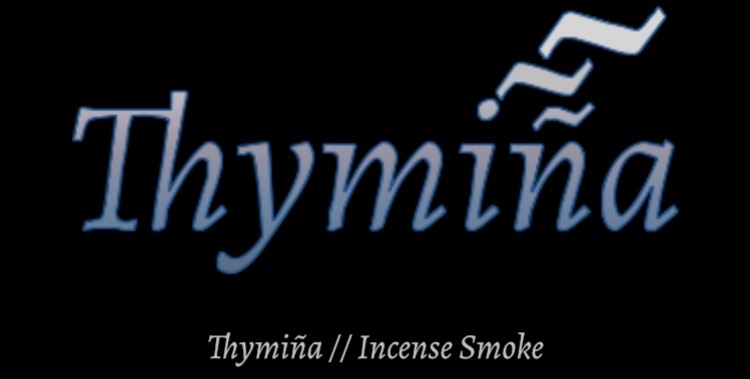
Thymiña // Incense Smoke
Aspect Founder - Saint Pines the Tranquil
Thymiña is one of the oldest aspects in Divollism, first used by Saint Pines the Tranquil as a way to empower his allies while impeding his enemies’ progress. This aspect utilizes a dusky smoke that lightly heals allies and increases their strength while hindering the speed and vision of enemies.
The training for this aspect is initiated by a trial that takes place inside of a forest or otherwise covered area. In this trial, trainees must cover multiple members of a party and navigate them across without being spotted by military volunteers. If they can successfully disguise their movements, then they pass the trial and move on into training.
Remeflorei // Nature
Aspect Founder - Healing Saint Tullilea
Remeflorei is one of the oldest aspects in Divollism, first used by Saint Tullilea to preserve the life of those around her. This aspect focuses heavily into healing through the means of nature and plants, binding their life force back together with roots and flowers.
The training for this aspect is initiated by a long form test in which trainees grow and tend to trees using only their magic and water. If the user manages to shorten the growth rate of an adult tree to 3 months minimum with no health complications to the tree, they will move on in training.
Vitrulum // Reflection Glass
Aspect Founder - Medical Circuit President & Reflection Saint Gareth
Vitrulum is a more recent aspect in Divollism, first used by Saint Gareth, who was also the founder of the Medical Circuit System and the singular sitting president of it before the creation of the Seventh Medical Circuit. This aspect involves the user summoning stained glass walls to reflect and redirect the attacks of allies and enemies, while additionally allowing for temporary protection of allies.
The training for this aspect is initiated after a trial between two other trainees in which they have to continually reflect a magic projectile between each other. If both trainees manage to keep the projectile going for over five minutes, then both pass the trial and move on to further training.
Benaltaqua // Holy Water
Aspect Founder - Saint Exori the Savior
Benaltaqua is a more recently developed aspect in Divollism, first used by Saint Exori the Savior, who used this aspect to cure the wounds of his allies while holding the enemy back with the burning water in the Battle of Port Ivolia during the Astella War. This aspect utilizes a boiling hot water that heals allies and cures them of any hindrances while stopping the enemies from crossing over to them via hazards.
The training for this aspect is initiated by a trial that takes place inside of a makeshift circular arena. In this trial, trainees must protect themself and an ally who cannot fight from a group of volunteer fighters in the arena for upwards of 10 minutes. If they can successfully prevent the fighters from approaching and can protect their ally via hazards, then they pass the trial and move on into training.
Summoner Aspects
The most recently developed aspects of Divollist faith, being a ranged fighting focused formation that doesn’t commit to weaponry. These currently consist of four magics.
Divollism Summoner Aspects
Summoner Formation
Eclypsivahnt // Twilight
Aspect Founder - Saint Galico
Eclypsivahnt is the first summoner formation to ever be recognized, and is approximately 102 years old as of writing. This aspect was founded by Saint Galico, who was looking for a way to mix the Solivahnt and Lunivahnt aspects together. This resulted in him creating a light that mimics that of the sunset and sunrise, though he adamantly asserted that it was that of eclipses. This aspect utilizes orange and purple light that slows the enemy’s senses before attacking them with focus, piercing strikes and wide, ensnaring traps.
The initiation for this aspect’s training mixes together the initiations of solivahnt and lunivahnt. This may begin at sunrise or sunset, and involves the trainee focusing their light to strike opponents coming towards them. This lasts until that duration of sunrise/sunset ends, and if trainees succeed in striking the opponent down or preventing them from reaching the trainee, then they move on in training.
Fettapersca // Slicing Winds
Aspect Founder - Silistiene the Wanderer
Fettapersca is one of the youngest aspects in Divollism, and was created by Silistiene the Wanderer 60 years ago. Initially, Silistiene was a follower of the Galenĩa aspect, but she didn’t like to use the dual daggers the aspect provided. Instead, she decided to learn how to create attacks independently from the blades, making slashes of wind freely around herself. Eventually, this resulted in the creation of Fettapersca, which utilizes sharp winds that could cut cleanly through large boulders if focused enough.
The training of this aspect is initiated in a trial where relic users must learn to cut through a large, solid block of stone in a singular attack. This trial also bars the use of any weapons or summoned weapons, forcing the trainees to use only their magic. Once the user can manage to do this, they move on in training.
Scribatramo // Scripture & Ink
Aspect Founder - Head Scholar Fontis
Scribatramo is one of the youngest Divollist aspects ever, being only 35 years old. It was created by Head Scholar Fontis, founder of the Mellowhall Magic Studies institute, after he had changed flumamnis’ water into ink. Eventually, he managed to change this entirely into utilizing ink and paper to attack, utilizing the ink to blind enemies and the paper to trap enemies, before combining both to summon more powerful skills.
The training for this aspect is done in a demanding trial, where trainees will be asked to memorize specific spell symbols before writing them using ink and paper when called. While the trial is far from lenient on the trainees, plenty of ink and paper is provided to ensure that they do not run out before the trial ends. Trainees will have to write down the symbols as told by the aspect trainer until they deem that enough time has passed, before grading them on accuracy. If trainees can get over 70% accuracy for spell symbols during the trial, then they will continue on through training.
Plumangele // Angel Feathers
Aspect Founder - Saint Alison the Young
Plumangele is the youngest aspect in all of Divollism, being barely a decade old. This aspect was founded by Saint Alison the young, known for having become a saint at only 23 years old, making her the youngest saint in Divollist history. Alison had previously used the Solivahnt aspect throughout her younger years for the mobility it has, but ended up hating how little range it covered as a bladed aspect. Thus, she trained endlessly with summoner aspect spells before eventually creating her own aspect, inspired by the angels from Divollist scriptures. This aspect utilizes sharp yet light magic feathers to attack the enemy while maintaining high mobility through the means of flight.
While the aspect itself is still too young to have a concrete training initiation, Saint Alison typically takes newer students in a more lenient trial that simply asks them to hit training dummies at a far range using small, singular ranged attacks.
Divollist Medical Circuits
The conglomerate of Divollism’s healers founded by Reflection Saint Gareth, which is incredibly powerful and remains as a self funded organization outside of the Grand Church, although many of its higher up Cleric Formation members are part of both (or were once part of the Medical Circuits).
Divollist Medical Circuits
Medical Circuits
The Divollist Medical Circuits are considered some of the most professional healers and doctors in the world, and are one of the most prized institutions of Divollist culture. The Circuits have become such a powerful part of Divollist culture that many Grand Church cardinals have previously been Medical Circuit higher ups, or are still active members of the Medial Circuits.
There are seven different Medical Circuits in Divollism, each with their own specific purpose and job.
First Circuit – Training & Apothecaries: This circuit is one of the most active circuits in Divollism, as it acts on a ground level as a training division for healers and doctors. It acts as a starting point for the rest of the medical circuit while they all get sorted out into different circuits.
It also creates and sells medicines and herbal remedies created through pharmaceutical studies, which is one of the main ways that the medical circuits make their money. Members who don’t go into another specialization tend to stay within this circuit as apothecaries, constantly on the move while creating and delivering medicines.
Second Circuit – Battle Aid: This circuit orders the movements of battle medics and healers, as well as training other cleric formation users to use combat spells alongside their healing. When this circuit isn’t active during conflicts or wartime, they send out clerics to assist in the many tests of the bladed formations, acting as on site doctors and mediators if conflict arises.
Third Circuit – Survey Corps: This circuit is tasked with surveying and checking on the general health of towns within Divollist territories, consulting with citizens and informing other circuits on where to go, as well as setting up Medical Circuit outposts on the ground level. This circuit also tracks the beginner members of the first circuit to decide their specialties, informing the higher ups of other circuits as recommendations.
Fourth Circuit — Research: This circuit is primarily focused on the research of sicknesses, diseases and medicines, finding ways to improve upon remedies and treatments for some conditions. This circuit works very closely with the Third Circuit, especially when crises arise, such as when it was found that people were developing crystal growths in the crystalline plains.
Fifth Circuit — Clergy: This circuit employs healers to churches within Divollist areas, acting as assistants to priests in scripture reading and performing healing rituals for their members. These healers are also suited to aid in the recovery of priestsmiths in the instance that the relic creation ritual goes wrong, although it is very uncommon.
Sixth Circuit — Nobility: This circuit provides highly trained healing clerics to nobility who become injured or ill, as well as to act as personnel in their manors during the duration (with policies attached). This circuit is typically the most inactive out of all the circuits, although they are brought out whenever the circuits are very low on funds.
**Seventh Circuit — Order & Relief:** The highest Circuit in Divollism. This circuit belongs to the highest ranking members of the other circuits as well as other highly trained healers, doctors and clerics. This circuit mainly focuses on maintaining relationships between the other circuits, ordering the movements and tasks of circuits, and dividing funds amongst the different circuits. At the same time, this circuit also handles disaster relief, being able to take swift action the moment disaster arises.
This circuit has also been tasked with the ongoing treatment of Saint Tabitha and subsequent research into her condition, having members from other divisions throughout the years join the Seventh Circuit solely to aid in the treatment. Although many changes in leadership happened in the four decades since the circuit took up the task, the Seventh Circuit has stayed determined to continue the treatment into the foreseeable future.
oh and here are the word arts for the Cleric and Summoner aspects!








Something coming soon for this 

Pretty sure