A molly-guard is a physical barrier intended to protect something from unwanted contact, especially a shield of some kind used to cover an important button.
It is named after a little girl named Molly, whose father worked at IBM. She tripped the kill-switch on an IBM 4341 mainframe twice in one day, prompting the crew to install a plexiglass cover over the button.
Metagross possesses the ability light metal, a trait that halve’s the weight stat of a pokemon which possesses it. This is pretty niche but the main reason it’s used is to lower the damage taken from moves like low kick and grass knot, which deal more damage the heavier the target is
The problem is that low kick and grass knot cap out at a certain weight, meaning they’ll always reach their maximum power at that value, but they’ll never exceed it
So the issue here is that our pal metagross… is still heavy enough to take maximum damage from low kick and grass knot… even with light metal
The ability literally does nothing
Which I think is more funny than just something like “oh well iron valiant learns skill swap” (which they do and they cannot use the move because quark drive cannot be switched off a pokemon)
On a related note, Umbreon can learn the Psychic-Type move “Synchronoise,” which is a pretty niche move that only deals damage to Pokemon of the same type as the user. Dark-Types are immune to all Psychic-Type attacks, so Umbreon cannot do damage with Synchronoise unless its target is holding the Ring Target item, which removes type-based immunities.
Oh, and Synchronoise is an Egg Move for Eevee, so you have to go out of your way to get an Umbreon with the move.
even more unfortunately, metagross can learn heavy slam via TMs, which is a move that deals more damage the heavier the user is compared to the target
so light metal is not only useless for metagross defensively as it still reaches the maximum threshold for low kick and grass knot, it also actively cripples its offense if they are running heavy slam
In generations 1 and 2, Voltorb and Electrode could not learn a single electric type move, despite both being electric type pokemon.
Cryogonal, despite being genderless, can learn the move Attract, which only works when used on pokemon of the opposite gender.
There are 4 different “first” pokemon depending on your perspective. Bulbasaur is the first pokemon in the national dex, Rhydon was the first pokemon to be designed, Mew is said to be the first pokemon ever, and Arceus is the god that created everything. (bit of a paradox on those last 2)
The term “shiny” was not actually created by the pokemon company, it originated from fans and the actual original term for pokemon that were not regularly colored were simply referred to as “rare” in the debug menu for G&S.
Guzzlord has the highest base HP stat out of all pokemon that isn’t a normal type.
Despite popular belief, MISSINGNO. is actually a pathetic joke as its highest stat is its attack at 136, which sounds good until you realize MISSINGNO. has a defense stat of LITERALLY 0, a special (special defense and attack were combined in gen 1) of 6, and a speed stat of 29. This pokemon does literally nothing good and everything can knock it out just by staring at it
Out of all the paradoxes ever made, including the ancients, only the pokemon iron valiant can actually learn the move wide guard.
Meltan and melmetal are currently the only pokemon who’s evolution method involves using a third party application, that being Pokemon GO, in fact, these mythical steel types are only mythical BECAUSE they were explicity made as a bridge between the mainseries games and the mobile app. Meltan is also the only mythical capable of evolution.
I had no idea I needed Iron Valiant smoking in my life.
Katanas are often depicted being wielded one-handed in just about any form of media they appear in, which is apparent in Arcane Odyssey with the Katana’s animations and the existence of Dual Katanas. Despite this, Katanas are primarily two-handed swords IRL, because of the weight disparity between the handle and blade itself; on top of that, they’re a lot less effective if you just swing them around with no technique whatsoever, which is a lot easier to end up doing if you’re just using one hand. My source is my katana-owning dumbass.
Why is this useless? Let’s be real, nobody is going to care about katanas being two-handed in reality while being shown as one-handed weapons in media, because in fiction, Rule of Cool rules all.
one handed is like being careless cause youre just stupidly stronger than everyone but someone two-handing it you instantly realize “oh shit they know what their doing”
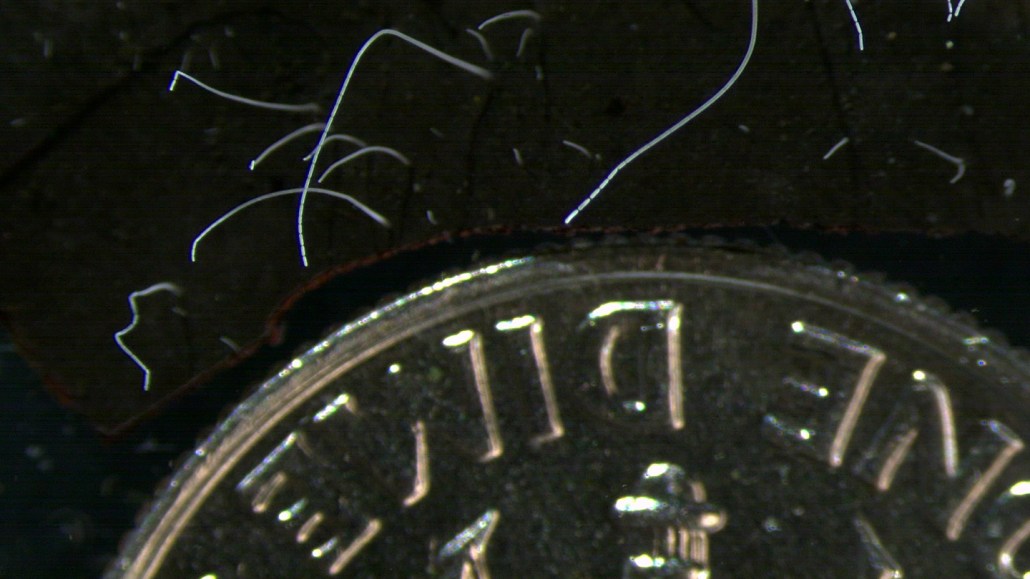
Thiomargarita magnifica is a species of bacterium so large that it is visible to the human eye. It’s about the size of an eyelash.
They’re not the only bacteria that are visible to the naked eye, but they are by far the largest. The runner up is a member of the same genus, Thiomargarita namibiensis.[1]
For scale, a dime, a coin so small that the average American may need an optical microscope to see it.
by the way, the name Thiomargarita means “sulfur pearl.” Margaritas, as in the alcoholic beverages, are not named after pearls, but after the Spanish word for “daisy.” ↩︎
Several possibly interesting things about languages!
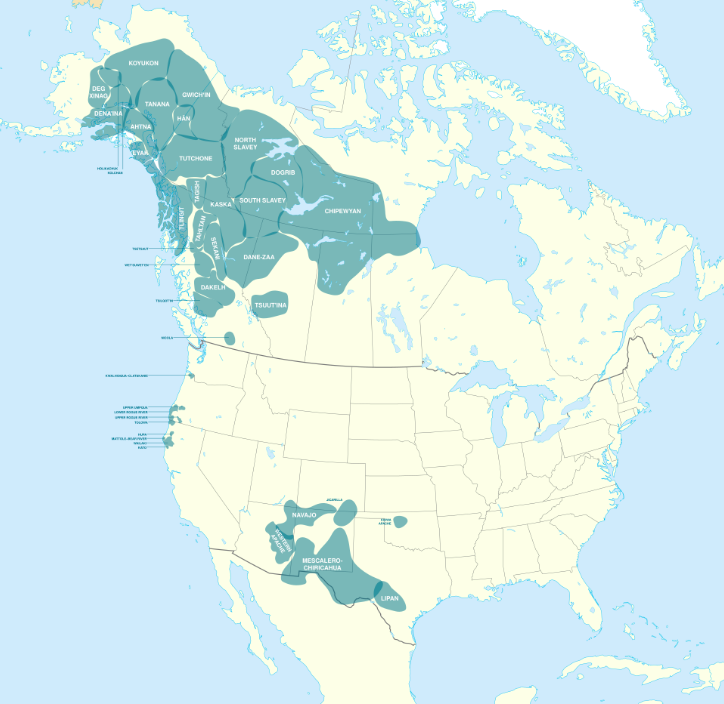
Na-Dene is one of the world’s primary language families[1], composed of indigenous languages in North America. Navajo is the most widely spoken member. One interesting thing about the Na-Dene family is that its range is absolutely enormous. Somehow a language from Alaska managed to get all the way to Central Texas. Some linguists believe that the Na-Dene family is related to the Yeniseian[2] family found in Siberia.
Uralic languages are, despite being located primarily in Europe, are not related to the Indo-European languages. Examples of Uralic languages include Finnish, Estonian and Hungarian. Yes, Finnish is more closely related to Hungarian than Swedish and Russian, but that’s not the point.
Now, why would I mention both of these? Well, in World War II, the Americans employed speakers of various indigenous languages as code-talkers. They would transmit messages in their native tongues, which were too difficult for enemy eavesdroppers to understand. Navajo is the most famous example of code-talking. The Americans employed many Navajo as code-talkers because the Navajo language is insanely complicated. It’s entirely unintelligible to even its close relatives. Even better, at that time, Navajo had no writing system, and only about thirty non-Navajo could understand the language.
However, a modern example of code-talking exists. Ukraine has a sizable Hungarian-speaking minority within the country. These men are not exempted from conscription/busification. So, the Hungarian language, a Uralic language completely unintelligible to the Russians, is reportedly being used by the Ukrainian Army.
Indo-European is an example of a language family you are likely more familiar with. Germanic languages like English and Romance languages descended from Latin are all members of the Indo-European family ↩︎
Yeniseian, unfortunately, is not doing so hot right now. Only about 150 people speak them. An entire language family is about to go extinct (unless it actually is related to Na-Dene; it’s still sad either way). ↩︎
Proto-Germanic peoples feared that speaking the word “bear” might cause one to appear. So, the original word “arkto”[1] was replaced by a word that meant either “brown” or “wild animal.”
Originally, “Awful” meant “causing dread” or “worthy of profound respect, awe, and reverential fear”. It was often used to describe the majestic, overwhelming power of God, the divine, or nature. Calling a grand storm or mountain “awful” was high praise because it filled the viewer with a mixture of wonder and sacred terror.
Over the centuries, the word underwent pejoration (shifting toward a negative meaning). By the early 1800s, awful had lost its noble, transcendent association and slid into meaning “very bad, ugly, or dreadful”
The saying “God awful” might from this saying, meaning “Reverent God”, though that could be argued since it only became famous in the late 19th century