Worldbuilding

More about the Impexis State

So basically this nation is important, so important in fact I don’t have a name.
Origianlly it was called the Impexis Regnum, Regnum being latin for Kingdom, however latin doesn’t exist (in this universe) so that name makes no sense. I’ll have to change it, at some point, but… it might take a while for me to be bothered!

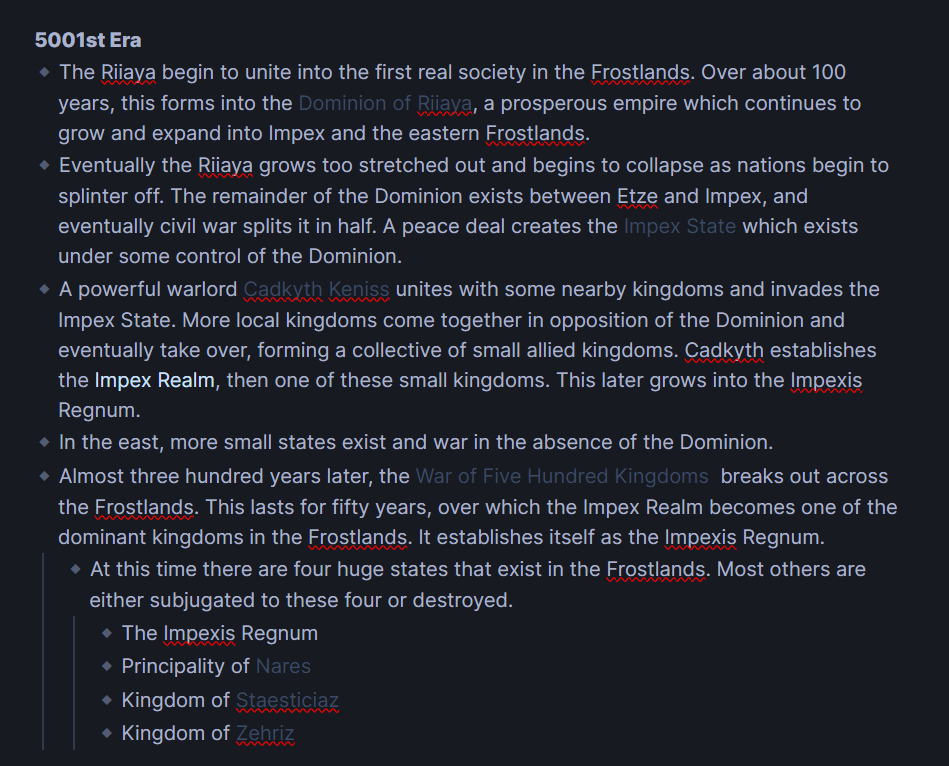
However, that doesn’t mean I don’t have history. I have plenty of history, but at the moment this is a bit unpolished. Here’s a screenshot from my notes though:
Language stuff… again
I also have a new phrase in the language that also doesn’t have the name.
Marnerasoa os Sevcusoso, which basically means Coat of Arms. Heraldry is different in the Impexis Regnum, as all noble families and military units have their own crest usually based on a bird.

I’ve explained this in my old worldbuilding topic but basically birds are a big symbol of freedom and life in Impexis, and having your family or military unit symbolised by one is a big thing.

This is why Marnerasoaf os Sevcusoso is probably best translated to ‘Bird(s) Crest’. ‘Os’ is something called a reinforcement (sort of an honorific, but not quite, since reinforcements serve other purposes, see next note) and the closest thing I can equate it to is the German or Austrian ‘von’, meaning ‘of’ (so yes, you could use it in your name to signify where you’re from)

So then its pretty accurate to translate this to Crest of Birds.

Reinforcements
Reinforcements can be added in two places, either before a word to provide extra context or in the middle of a proper noun.

For usages in the proper noun, we have stuff like the Marnerasoaf os Sevcusoso (which yes is a proper noun due to reasons) or perhaps Akos Naruvs Frost, which is like saying (Their) Majesty Akos Frost. Naruvs can be applied to the reigning monarch, their spouse and their heir, while other royalty can be referred to as (for example) Argemmon Naselis Elin, (Their) Highness Argemmon Elin.

For usages before the word, my best example is Y and N. All pronouns are gender neutral in this language as demonstrated by the below table:
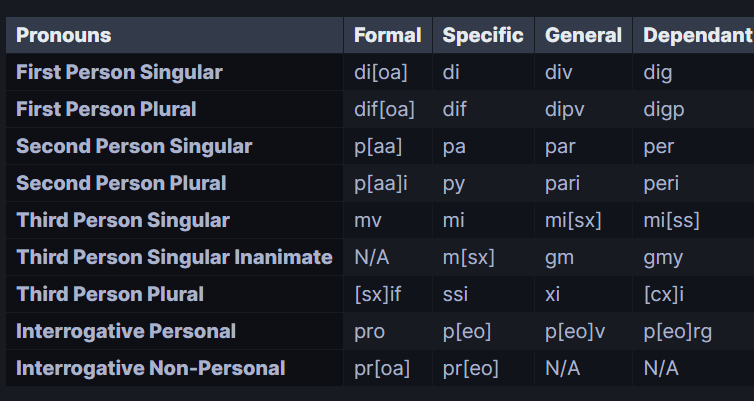
But you can make any of them gendered (or for that matter, literally any word gendered if you really wanted to) by adding Y (feminine reinforcement) or N (masculine reinforcement).

Gender isn’t that important in Impexis culture, although it isn’t completely unimportant as you could use it to specify in some circumstances, but there are other parts of the world where gender matters more. There’s also parts of the world where gender doesn’t exist (nonbinary kelp people, I shall not elaborate). But in short, there’s no major connotations here for describing something as masculine or feminine.

Writing this I realise that I’m probably not getting my point across with many of these language things but I mean I’m confused by what I’ve written in my notes here so it might take a moment to translate.


waffle over
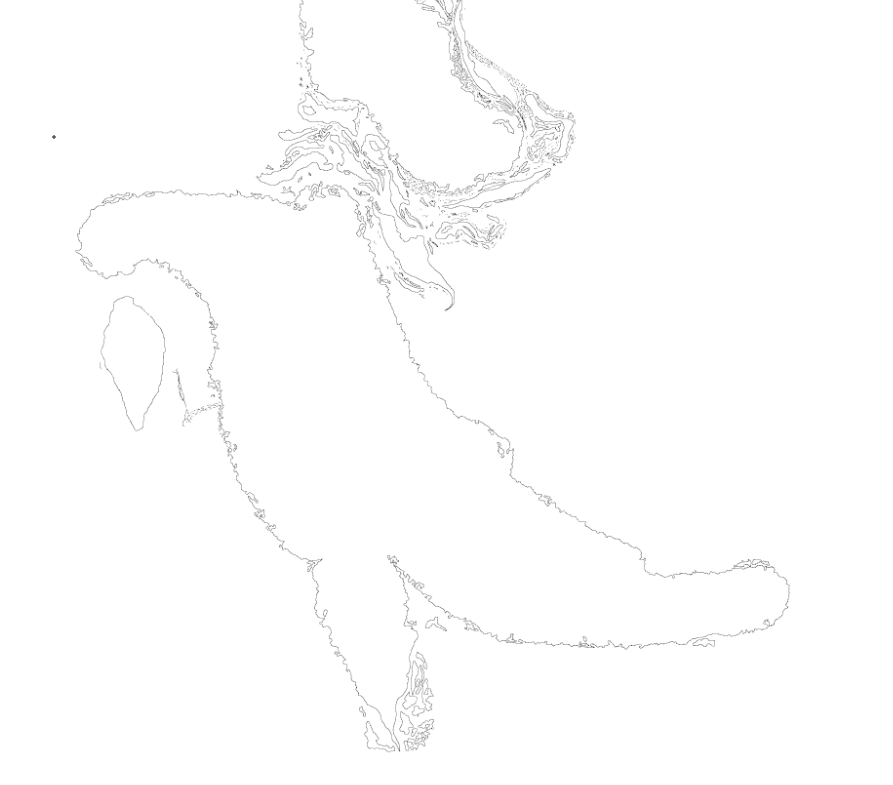

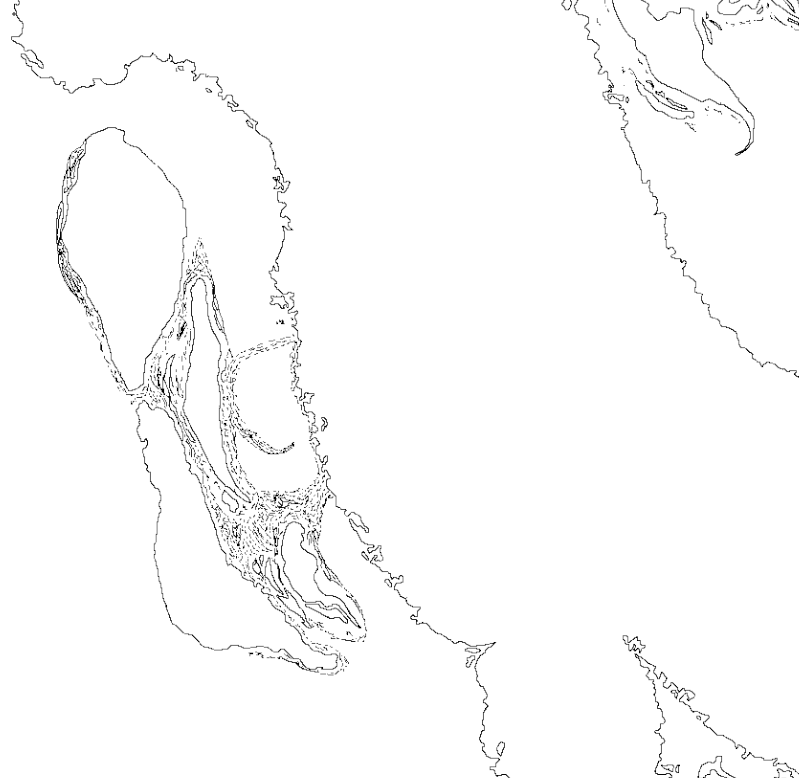
map progress (slowly)

1 Like

Italy if it were, like, a really really big boot

1 Like

Anyways I honestly gotta start implementing my own maps from google sheets into my world building too

1 Like

level 100 mafia boss boot

little idea I had yesterday which was too fun to not do anything with:

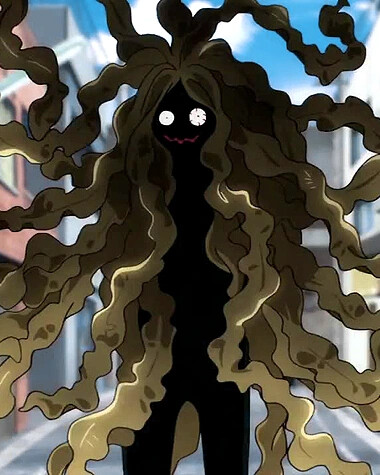
The Muaranari are the people of the northern Elisa Rejüsis who arrived from up north to the dry coastal lands of Elisa. They are most well known for their domestication and usage of the Agustost, huge four legged animals with large, hollow horn-like protrusions that grow from the side of their heads and end at the back of their body and two long proboscises. These hollow protrusions have openings near the top and are used to store water, and are large enough that the Muaranari often live inside them.


Basically they’re a travelling nomadic people who live on these giant sort of Mammoth/Elephant like creatures.

map

Mortal Species

As of the year 1018 in Akos’ era, there are seven species of mortals that reside (at least on this planet, but like, other planets don’t matter in the Celestial Game during this time period, here’s the main board.)

I am trying to expand on each of these, but this is what I have for now.

These are the:

Daesálir Perliti

Charismatic and short lived beings who reside in the east and south of Hêyth Rejüsis, in the west of Sabasda Rejüsis on Elisa Rejüsis and on Ietrias Rejüsis.

They have an eye for mercantilism and trade, with some of the largest and most powerful nations being theirs.

Their name is sort of the equivalent of ‘Silver Tongued’, with Perliti literally meaning Tongue (As in the physical body part, and the act of using it rather than a language) and Daesálir has connotations of charisma and even bribery.

They look like how you’d expect a human to look, although their faces are sharper with their tongues, ears and chin being more pointed.

Ezacali

The Ezacali are the kin of the Dragons, the only non-god beings to have the gift of providing consciousness and life. The Dragons themselves were made by Rethizal, Death.
They mainly reside on the northern island of Zacala Rejüsis and the surrounding archipelagos, but also in the eastern Sabasda Rejüsis and Hêyth Rejüsis. They are characterised by having shining armour like scales, and hard bone ridges across their body. They are the longest lived of the mortal species.

Verli Akǎsis

Verli Akǎsis almost literally translates to the ‘Northern People’. This is the species that Akos is a member of. They are solely found in the very north of Hêyth Rejüsis in the giant tundras, forests and ice deserts called the Itherïl Rejürer (Acenta name meaning Land of Ice), although previously some of them could be found further south.

They originated from two separate cultures and tens of thousands of years later that divide can still be seen today. The Riiaya Etze originated from the very northwest of Hêyth Rejüsis while the Staemista first came from further south in the eastern part of the continent.

They are characterised by their pale, almost snow white skin and their resistance to extreme temperatures. They live significantly longer than the Daesálir do.

Kalus Vias

The Kalus Vias are the second winged people, who reside in eastern Hêyth Rejüsis, a few parts of Sabasda Rejüsis and on Moinei Rejüsis. They are characterised by having two feathered wings and feathers growing across their arms and back, although the rest of their body is remarkably similar to the Daesálir.

Lirase Nifes

Half-Nifefis, as they are sometimes known, are the offspring of a now lost mortal species called the Nifefis and Daesálir Perliti. They are of similar shape and stature to the Daesálir if not slightly shorter and slimmer, and their skin is very slightly translucent and shimmers. They live on T’veran and the islands north of Hêyth Rejüsis, although some live in on Hêyth Rejüsis itself, in a very limited capacity.

They can also see perfectly well without light, and are one of two species to be able to do this.

Lirase Nimes

The Lirase Nimes, or the Half-Nimeya are the offspring of the Nimeya (Again, now lost) and the Daesálir Perliti. They are of similar build, with softer, rounder and less pointed features, and are significantly more agile than the Daesálir. Notably their skin constantly produces heat, with this varying from person to person but in the most extreme cases this appears as a sort of flame like glow in cracks beneath their skin which falls off their body as burning ash.

They reside on Hêyth, Sabasda, Moinei and Ietrias Rejüsis.

Alrë Caus

The Alrë are an semiaquatic species (that is, they can live on land or at sea equally effectively) with eight limbs whose bodies are made out a fibrous leafy material. They are the dominant species on Moinei Rejüsis, although also populate Elisa Rejüsis, the Amagrathei Ocean, and the Sea of Moia.

I want to develop these guys a bit more though since they’re definitely the most interesting of the current species. They can also see in the dark.


In terms of how long these species live (from longest to shortest):
Ezacali
Lirase Nifes
Verli Akǎsis
Alrë Caus
Lirase Nimes
Kalus Vias
Daesálir Perliti

1 Like

Alre Caus real

Other Mortal Species

These mortal species no longer exist for various reasons.

Gopsya Greta

The first of the mortal species. Compared to modern day mortals they are giant. Little is known about them, but a later historical text called the Gopeyal Manuscripts detailed both historical records of the remains of their civilisation, and mythological stories surrounding them.

In a more modern context within Akos Frost’s works Vilosofs ki Frost, he describes a vision of a Miarikis called Findeu shown to him by Belamuk who is believed to have taken the form of a Gopsya greta by most sources.

‘I realise now the God which has taken itself upon my mind is not silent, and although I have believed that it was my own thoughts tormenting me so, perhaps it is not. Whichever deity I encountered in that cave recently showed me an odd depiction of a figure, whether man or woman I could not tell, leaning over me, bearing in the left arm a sword, and in the right a spear. Although it was built of black-purple stone, its face was both pale and dark, not like one of those species who reside with us today. I believe it must be a deity, as I have never read of anything quite like it.’

Gopsya Irsara

Despite the shared name and place of birth, being a former river delta in the centre of Hêyth Rejüsis called Gopseya, these species are completely different form the Greta, being shorter, for one, stouter and wider than a modern day Daesálir. Their skin is also recorded as being a duller grey or brown colour.

They were remarkable scholars, linguists and scientists and built some of the largest civilisations in history before their downfall.

The Irsara were wiped out in a huge plague (along with most of the rest of the mortal population), of which the Irsara were especially vulnerable.

Nimeya & Nifefis

The Nimeya and Nifefis are sister races born by the hand of a God, who originally resided on the islands south and north of Hêyth Rejüsis respectively, but migrated about. The Nifefis mostly ended up on T’veran where they remained until they eventually disappeared at the end of the 5000th Era, although not before encountering Daesálir Perliti.

Some Nimeya migrated north across the sea (they just sort of… drifted) and met with the Daesálir there, but their experience was much more complex with various societies formed before they also dissapeared.

Both species were described as appearing ethereal, pale, glowing (literally) semi-transparent beings who seemed to not fully have a form.

Eli’v’sareaes

The Eli’v’sareaes are the children of the Great One, an Arasirikis who just sung them into existence one day in an event aptly named The Song of the Great One.
They resided on Elisa Rejüsis originally but migrated to Moinei Rejüsis and Amagrathei Rejüsis (Which now doesn’t exist due to major world events I’ll detail at another point.)

Physically they were very thin and tall, with characteristically slender and long limbs, and had skin tones ranging from forest green, to pale red, dark grey and silver.

Their greatest culture, the Eremasi were the constructors of giant cities along the coastlines of the three great lakes in Elisa, all of which were destroyed in a great series of wars by colonial Daesálir Perliti from Hêyth and Sabasda Rejüsis. Many of the other members of this species were wiped out by famine, further civil war, and diseases.

Dragons

Okay but they aren’t really mortals so do they count here (I’ll think of something at some point I promise)

2 Likes

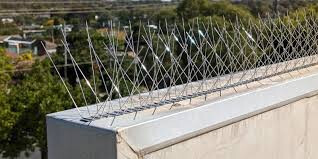
So you know bird spikes? The things to stop birds landing where you don’t want them?

I had a thought that winged people such as the Kalus Vias would develop defences against those in the air, and I think giant spikes would realistically do the trick. These aren’t gonna just prevent them from landing like the flimsy things in the images, but will be large and dangerous enough to injure and potentially trap Kalus Vias who flew too close. You wouldn’t manage to land because generally the Kalus have quite large wingspans.

Anyway, welcome to Dellefau, the most welcoming city in the world!

Dellefau

Type City, Capital
Continent Hêyth Rejüsis
Name (Local Language) Dellefau

“The streets out there are filthy- is the city aware? Has nothing been done?”
“Most 'round here can fly, m’lord. There’s no need, the Keep says.”

The capital and largest city of the State of Dellefau, a sprawling layered urban city in the centre of the Rirrossiiaan Commonwealth.

It is ruled by the Iron Keep, a fortress named for the large iron spikes that protrude from the ground around it, designed to force winged people to land to get near.

The lower layers of the city are densely packed and tight, whilst the upper layers are large enough for the winged folk of Rirrossiiaa to fly between buildings.

New organisation!

The Vereta Yuzetir are a group of scholars operating in a nation in western Hêyth Rejüsis called the Rirrossiiaan Commonwealth. Their name translates roughly to ‘Path to the East’, east being the direction of knowledge and enlightenment in local culture.

They began as herbalists in their very starting years and gained a reputation as a sort of order of witches. In the time of Akos Frost they’re the largest scholarly organisation in the Rirrossiiaan commonwealth that isn’t affiliated with an institution.

An important member of this organisation is Viötira Zephyr, who is the mother of Akiro Zephyr, a young man who for a period of time is a companion of Akos Frost and Lumi Zephyr, a Rirrossiiaan martial artist. She was also the spouse of Harethiza Hal, a Miarikis created by the primordial conscious being Rethizal in an event called the Fourth Descent.

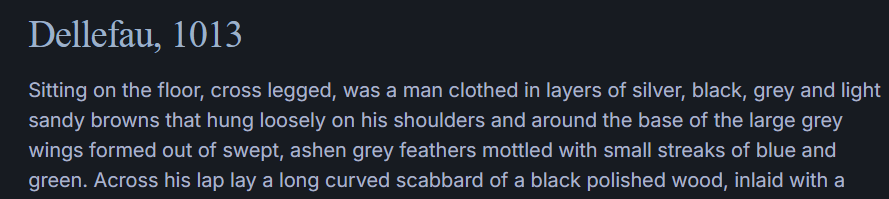
Doing some writing about a pretty interesting character, although this is only the smallest fraction of their history.

Written the basic layout for this scene and I want to go over and polish it up a bit since it’s quite rough right now

woah

might put additional lore here later idk

1 Like

Lore for the thing above!

The Zephyr family has been renamed to the Zyotura family to better fit language restrictions. This is a T’veran name, despite the family living in Rirrossiiaa.

For the same reason, Icarus Fielnflaerreh has been renamed to Icarus Afilisaka, although both ‘surnames’ are still titles. His actual surname is Kobaspera.

The scene I posted above involves two characters, Zeriö Zyotura and Icarus Afilisaka. Icarus is a character I want to develop more, since my previous ideas for him were very two dimensional. He however is driven by a drive for individuality, rebellion and independence from the Celestial Game. In many ways, he’s similar to Akos - both characters seek freedom from the conditions of the world they’re put in, freedom from being pieces in the game.

Icarus does this by fighting. He’s in possession of a very powerful artefact, in fact probably the single most powerful thing a mortal has ever possessed, that takes the form of an amulet of a carved stone, which appears to be made out of jade or a similar green rock. This next part might spoil anything else I write and I really don’t know if I’ve mentioned this before.

I’m still working out the why and how, but this amulet lets Icarus control the Saiis (Time), setting him apart from everyone else - beings of Hierarchy, or Serreth.

Due to this, he doesn’t follow the same rules of fighting. He can move or react faster than his opponents. He uses it to perform feats unthinkable by most, making him an extremely unpredictable fighter. He can also avoid attacks, and decide to some degree what events happen in time and what don’t.

Also he has the huge advantage over everybody else in that he can get places super quick. Really convenient when running from literally everyone.

He’s fighting against a man who introduces himself as Hal. Icarus in his quest to show the universe who’s boss encountered rumours of somebody who could supposedly see the future, and tracks him down wondering if there’s somebody else with a Saiis amulet..

As it turns out, Hal isn’t who he seems and is actually a Miarikis called Zeriö Zyotura or Harethiza Hal. He was created by the first being Rethizal in a great event called the Fourth Descent, about 1000 years before the story. He is the guardian of the Dead, protecting their consciousnesses as they are taken to the Rifts. His domain involves many wind-related strings of Serreth, allowing him to hear events over great distances, which gives the impression of being. He uses a technique called Makartis, which is the act of using strings of Serreth to unleash attacks via a weapon, a very rare technique which is difficult even for a Miarikis to master, and even harder for a mortal to do (although, it’s perfectly possible to a lesser degree).

At some point, Harethiza Hal decided that his wanderings across the world (spending lots of time in the land of T’veran in the north, where he picked up plenty of his habits), and travelled across the world to Rirrossiiaa, taking on the name Zeriö Zyotura. Eventually he encountered a member of the Vereta Yuzetir called Viötira Sirias, a scholar and warrior who at some point identifies him as the god Harethiza Hal. The two grow close after a year of travelling together and despite Zeriö’s initial reservations about feelings to somebody whose life would end in the smallest fraction of his, the two eventually marry and have a son called Akiro Zyotura. However, while Viötira is pregnant with their daughter, Lumi, Zeriö learns of Icarus’ impending attack, sending her and Akiro into hiding and luring Icarus to a remote part of Dellefau, where that scene takes place.

2 Likes

Honestly I considered making different species for my fantasy thing but I don’t know if they’ll fit for the type of world I’m making

All my species are I’d say quite humanoid other than the Alrë Caus. It definitely makes them all sort of fit together but I still want their differences to have impact on how their societies function and interact.
I can see why you’d be hesitant to add them since they do change so much.

I’ve recently finished reading the Silmarillion and I’ve got a lot of thoughts from it. One thing I’ve sort of noticed is that Tolkien’s species were very separate as societies when I think in my sort of world it would be interesting to see how their cultures mix more than anything, especially due to their similarities. A city with a mixture of flying/nonflying people would be completely different to Dellefau, which is engineered primarily for the Kalus Vias.

Yeah, it’s especially hard considering the magic system I’m going for, though I have some ideas to make this work based on that.

1 Like

My next bit of writing will be about a very special group of people in Akos’ state during a great conflict called the Stamstani War, and Iri Blossom.

I had a few ideas for how the early part of Iri and Akos’ story went, but I’m going to rework them and have the pair meet much earlier on near to the start of the war and have their relationship develop more before the year 1018.

Its the year 1014, and the Stamstani Republic are moving fast across the country to the capital city Ipaferi Iferissoa Al Seir. (Ipa-fur-ih Ifer-issue Al Seer) Across the north coast, a group of hunting people affiliated with Impexis called the Geracinardicorhe (Jer-ac-in-ard-ick-ore) – Mole Hunters, had their settlement attacked by a Stamstani raiding party across the north coast. Stamstani suffered a great loss in this attack, since the Geracinardicorhe are great fighters living in some of the most dangerous parts of the world (with giant deadly ice moles).

Over a hundred of them have travelled to the Ipaferi Iferisso Al Seir to show their solidarity with the Impexis people and to help them in the upcoming war, meeting Prince of Frost Ledus Frost, his young son Akos Frost and the youngest officer in the Impexis Military, Iri Blossom.