The Impexis Regnum has been renamed to The Impexis Magirusa
Here’s its flag
I almost read that as “Magius” 
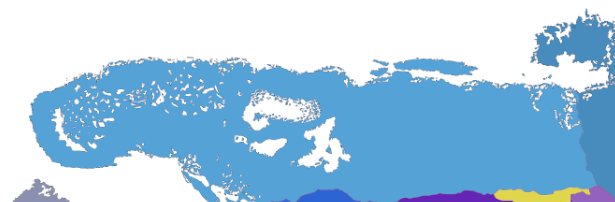
I’m currently in the process of colouring the map by country (so that each country has a unique colour to identify territory) and its really ugly but I guess that’s too be expected. Might try to do a four-colour map though at some point although perhaps doing five or six colours would be easier.
The Great Republic of the Stamstani Province was the second largest country in the Itherïl Rejürer (Impexi: Iferiskavsa Ner’Gemiksoaf, Stamstani: Nar Iferilgen) - the lands at the north of Hêyth Rejüsis - for a few hundred years until 1017 when it was destroyed completely by a powerful weapon in a great war.
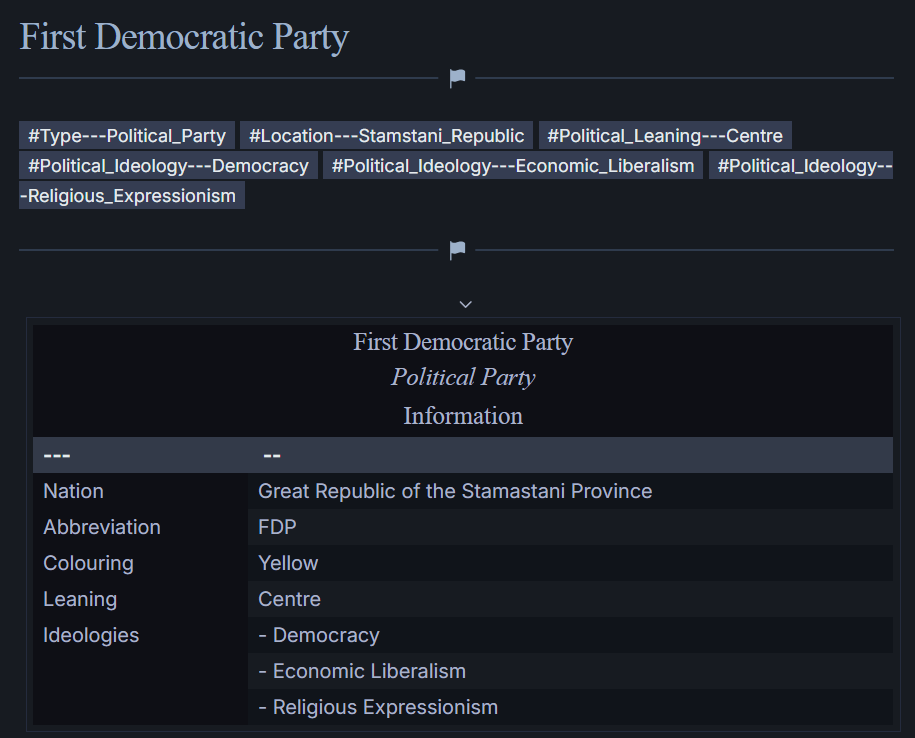
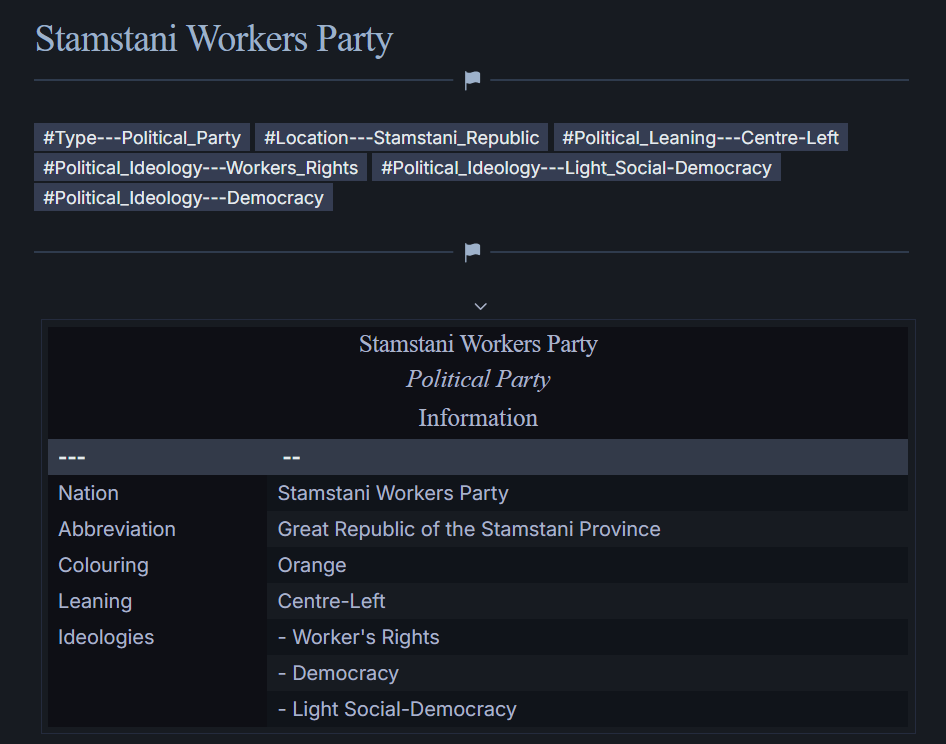
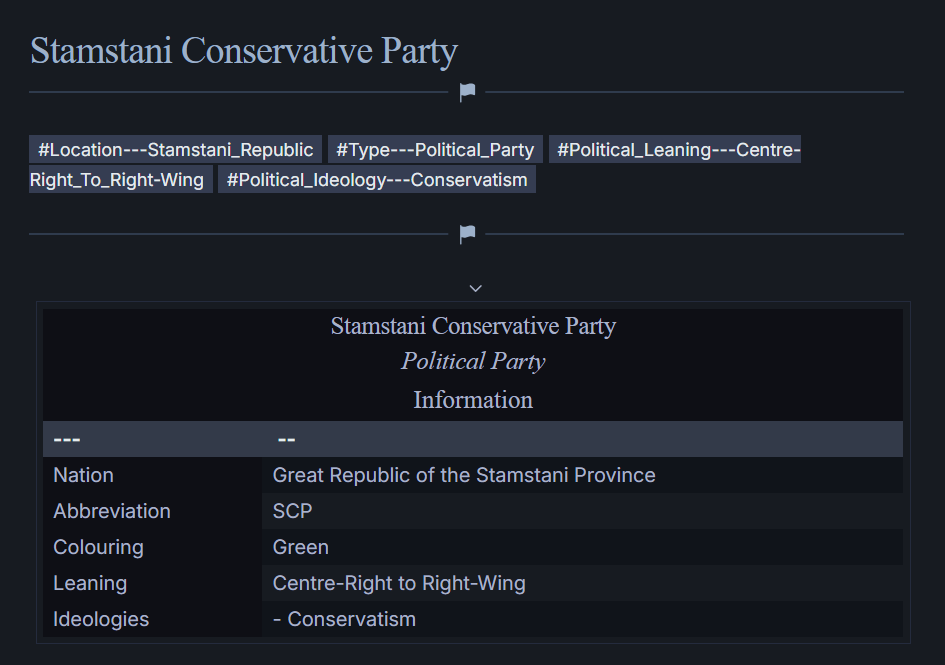
It was one of the first democratic nations in the world. In 1010 it had five major political parties operating across all three chambers of its parliament.
From smallest to largest these were:
I am watching this with great interest
(also I must ask, what are you using to make the political parties and parliament diagram?)
The diagram maker was just a thing I found online, you can download SVG file from it but the forum doesn’t support them I think.
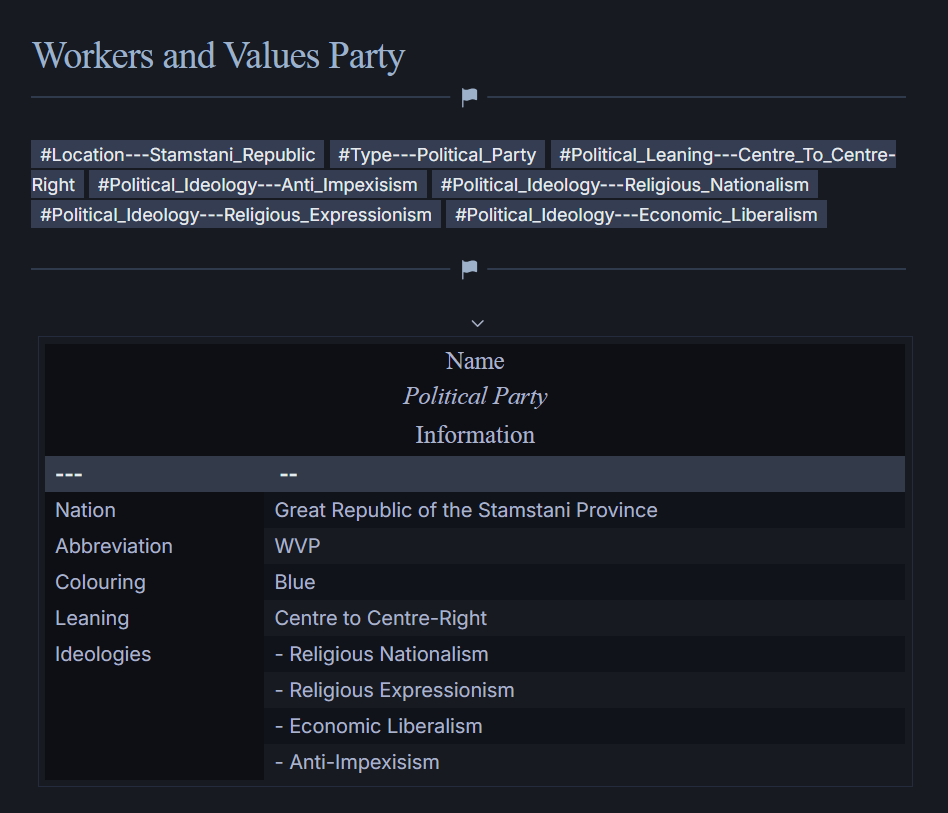
The political party info was screenshots from my note taking app. There’s definitely more wordlbuilding-oriented apps people have made which are really similar to this but Obsidian is as basic or as complex as you make it.
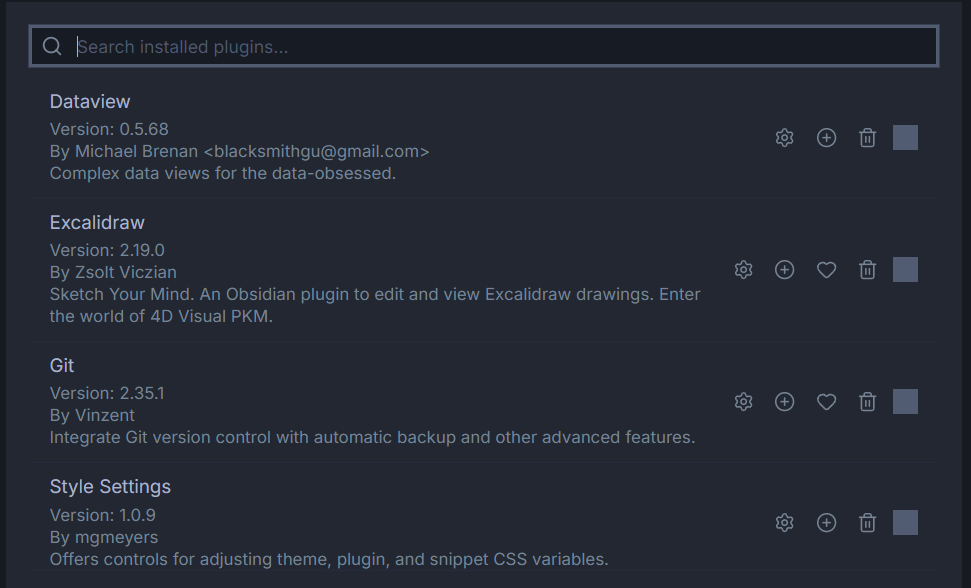
These are the plugins I use although in terms of appearance only Style Settings matters as it integrates with the theme I’m using
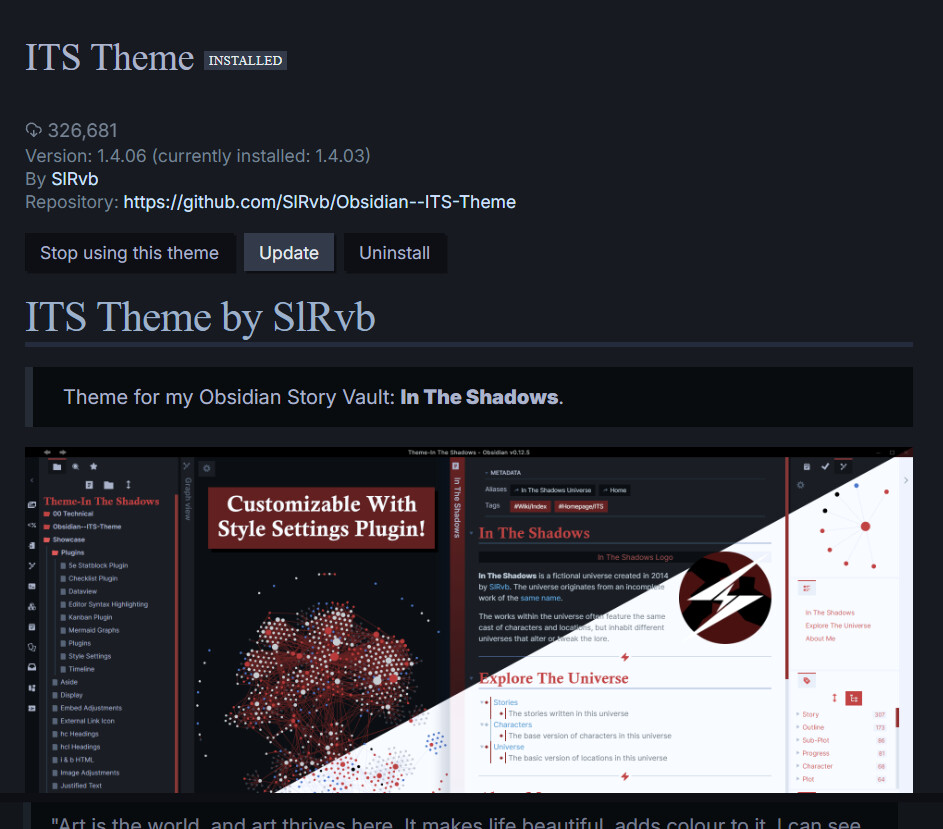
And I use a customised version of the ITS theme since it lets me create stuff like info boxes (and a load more, but I haven’t checked everything out)
Pǎdaesêri is the name of the currency issued by the Grand Courts for the commissioning of bounties. They are provided in rectangular tokens usually made of silver, or a silver alloy and each pǎdaesêri is generally worth the equivalent to enough to comfortably live for a month. They were designed chiefly for ease of transport and carry by bounty hunters on the move.
The use of soft metals in the currency allows the cutting of metal off the tokens to trade in smaller quantities. The front of a pǎdaesêri is printed with the minting date and original weight, as well as the stamp of the Grand Courts and composition of the metal.
My thought process behind these was actually tea! These are inspired by tea-bricks which were used as currency in some parts of the world. I wanted something that could be universally valuable for bounty hunters and also compact enough to carry on you.